

Choosing Between Ceramic and Titanium Dental Implants
Choosing a dental implant isn’t just about restoring a tooth — it’s about selecting a material that aligns with your values, supports overall wellbeing, and delivers both aesthetic and functional confidence.
At Ceramic Implant Clinic, many patients come to us with carefully considered preferences based on their health history, lifestyle, or sensitivities to certain materials. They often seek metal-free, biocompatible solutions consistent with a wellness-focused approach.
This guide compares ceramic (zirconia) and titanium dental implants to help you make an informed, personalised, and values-aligned choice.
Titanium Implants
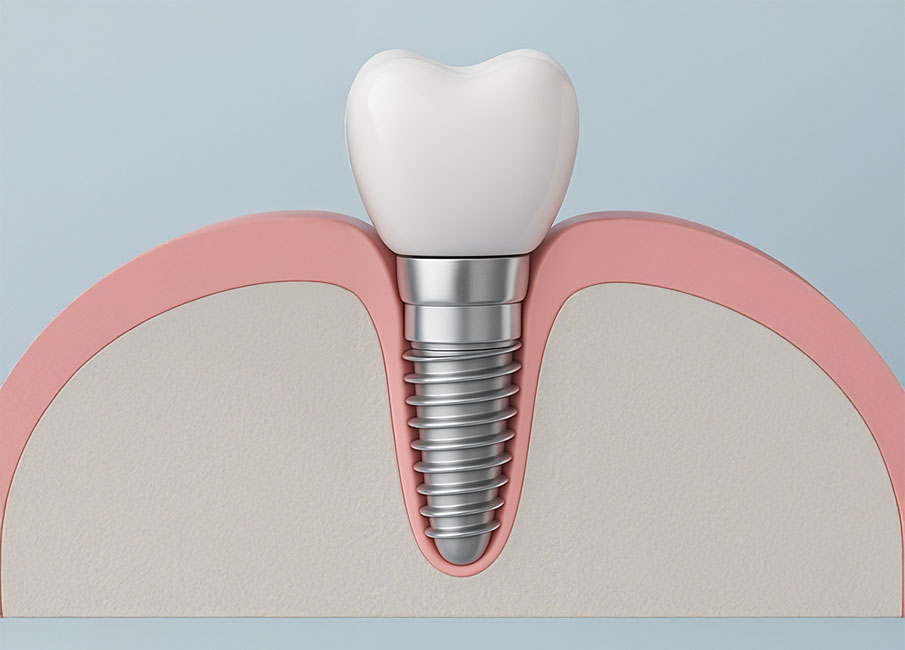
Titanium dental implants are most commonly made from:
Titanium remains the most widely used implant material. However, some patients explore alternatives due to personal preferences or known sensitivities.
Zirconia Implants
The bioinert nature of zirconia makes ceramic implants particularly suitable for patients with metal hypersensitivities. This material also ensures reliable osseointegration with the bone.
Zirconia: Naturally white and tooth-coloured, providing a seamless match with surrounding teeth and offering highly aesthetic results—particularly in the smile zone
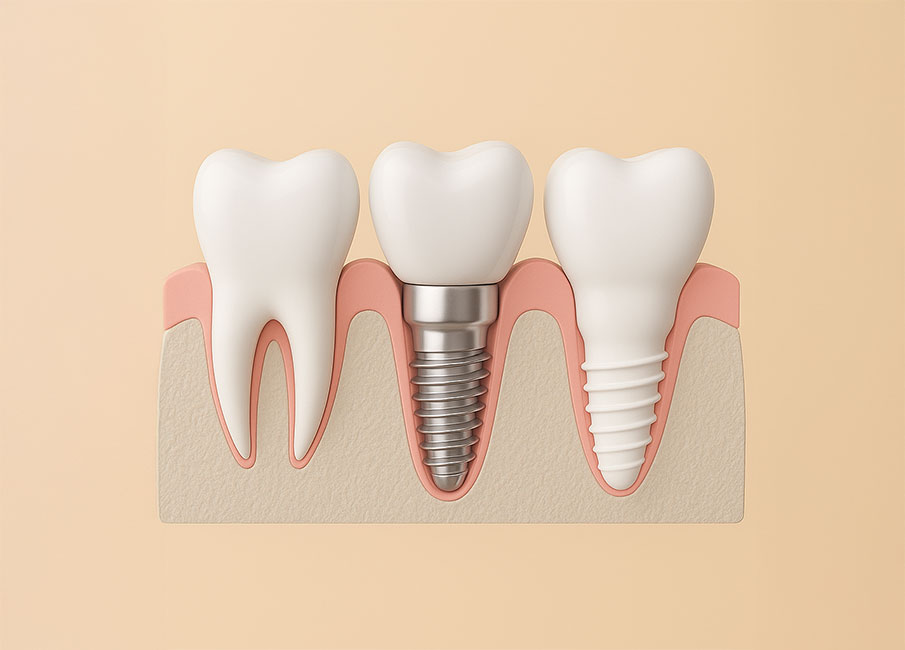
Titanium: Its grey colour may become visible near the gumline, especially in cases of thin gums or recession over time
Titanium:
Sources: Sicilia A, Cuesta S, et al., Clin Oral Implants Res. 2008; Geis-Gerstorfer J, et al., Materials. 2021
Zirconia:
Both titanium and zirconia integrate well with bone (osseointegration), but soft tissue responses differ:
Titanium: A metallic and electrically conductive material
Zirconia:Non-conductive, non-magnetic, and electrically neutral—appealing for patients seeking energetically inert materials
Titanium: A widely used and effective material in conventional dentistry
Zirconia: Often chosen by patients who:
| Feature | Titanium | Zirconia (Ceramic) |
|---|---|---|
|
Material |
Grade 4 / Grade 5 titanium alloy |
Yttria-stabilised zirconia (TZP or ATZ) |
|
Appearance |
Grey; may show at gumline |
Tooth-coloured; blends naturally |
|
Conductivity |
Conductive |
Non-conductive, inert |
|
System Interaction |
Metallic |
Non-metallic, bio-inert |
|
Hypersensitivity |
Rare (~0.2–1%) |
No known hypersensitivity |
|
Preferred by |
Conventional patients |
Wellness-conscious, aesthetic-driven patients |
Both titanium and zirconia implants have strong clinical track records and provide stable, long-lasting results when properly placed and maintained.
However, zirconia’s superior soft-tissue integration and lower plaque affinity may offer advantages for patients with a history of gum inflammation or a family predisposition to periodontal disease. Its ability to form a natural tissue seal and maintain vascularisation supports long-term stability and may reduce maintenance needs.
While every case should be assessed individually, zirconia can be particularly valuable for those prioritising soft-tissue health as part of their overall treatment plan.
Berglundh T, Lindhe J. Dimension of the periimplant mucosa. Biological width revisited. J Clin Periodontol. 1996;23(10):971–973.
Scarano A et al. Bacterial adhesion on commercially pure titanium and zirconium oxide disks: An in vivo human study. J Periodontol. 2004;75(2):292–296.
Sailer I, Strasding M, et al. Nine-year clinical performance of zirconia implants: A prospective case series. Clin Oral Implants Res. 2023;34(1):1–9.
Abrahamsson I, Berglundh T, et al. The mucosal barrier following abutment dis/reconnection: an experimental study in dogs. J Clin Periodontol. 1997;24(8):568–572.
Quirynen M, et al. Plaque formation on implant surfaces in vivo: influence of surface roughness and surface-free energy. Clin Oral Implants Res. 1990;1(1):15–21.
Derks J, Tomasi C. Peri-implant health and disease. A systematic review of current epidemiology. J Clin Periodontol. 2015;42(Suppl 16):S158–S171.
Discover metal-free ceramic implant solutions designed with biocompatible materials, precision planning, natural aesthetics, and care that considers the whole person.