
At Ceramic Implant Clinic, our approach to implant dentistry is not only about replacing missing teeth. It is about planning treatment carefully, supporting healthy healing, and using materials and techniques that align with a more biocompatible approach to care.
One of the ways we may support healing in selected surgical cases is through PRF, or platelet-rich fibrin.
PRF is made from a small sample of your own blood and may be used during procedures such as tooth extraction, bone grafting, socket preservation, sinus grafting and ceramic dental implant placement.
Because PRF comes from your own body, it fits naturally with our philosophy of using biologically supportive techniques where appropriate, while still relying on careful diagnosis, precise planning and evidence-based surgical principles.
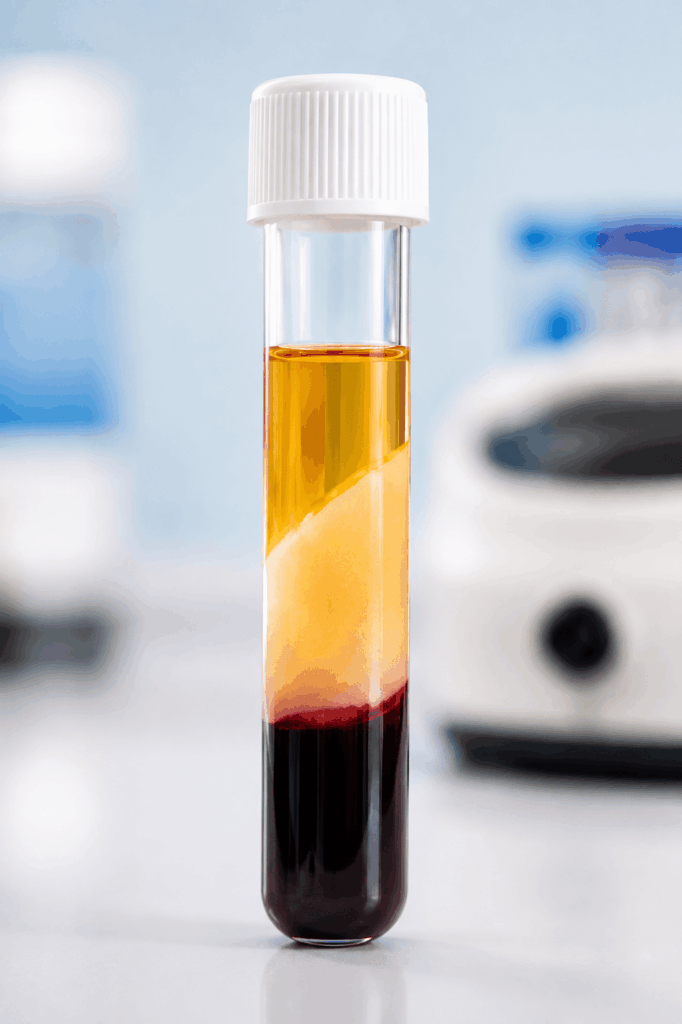
PRF, or platelet-rich fibrin, is a concentrated preparation made from your own blood.
A small blood sample is collected and placed into a centrifuge, which spins the blood to separate and concentrate the healing-related components. This creates a natural fibrin clot or membrane containing platelets, white blood cells and growth-factor-rich elements.
In dentistry and oral surgery, PRF may be used to support soft tissue healing, stabilise graft materials, protect extraction sockets and assist the body’s natural healing response.
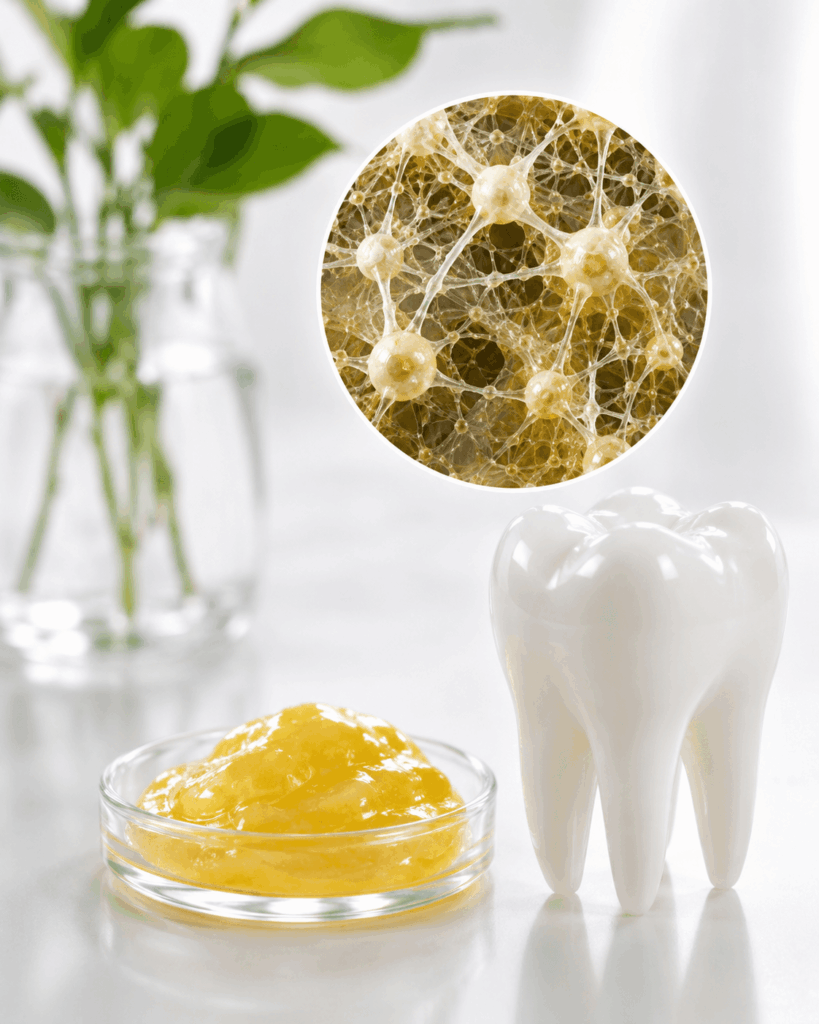
Unlike some older platelet concentrate techniques, PRF is generally prepared without anticoagulants or chemical additives. It forms a natural fibrin matrix that can be placed directly into or over a surgical site.
At Ceramic Implant Clinic, PRF may be used as part of a biologically guided surgical approach.
It is not a miracle treatment, and it does not replace the need for careful surgical planning. However, in selected cases, PRF may help support:
The aim is to support the body’s own healing potential while creating the right foundation for long-term implant health.
Many patients choose ceramic dental implants because they value a metal-free, biocompatible and wellness-aligned approach to tooth replacement.
PRF complements this philosophy because it is created from your own blood and used as a biological adjunct during healing.
For patients who are having zirconia dental implants, tooth extractions or bone grafting, PRF may be considered as part of the treatment plan to support the surgical site and surrounding tissues.
At Ceramic Implant Clinic, we do not use PRF as a marketing add-on or a one-size-fits-all treatment. We use it where it is clinically appropriate and where it may support the overall treatment goal.
PRF may be recommended during different stages of dental implant treatment, depending on your individual case.
Common situations may include:
Your dentist will explain whether PRF is recommended for your procedure and how it fits into your overall treatment plan.
Bone grafting may be required when there is not enough jawbone to support a dental implant in the ideal position.
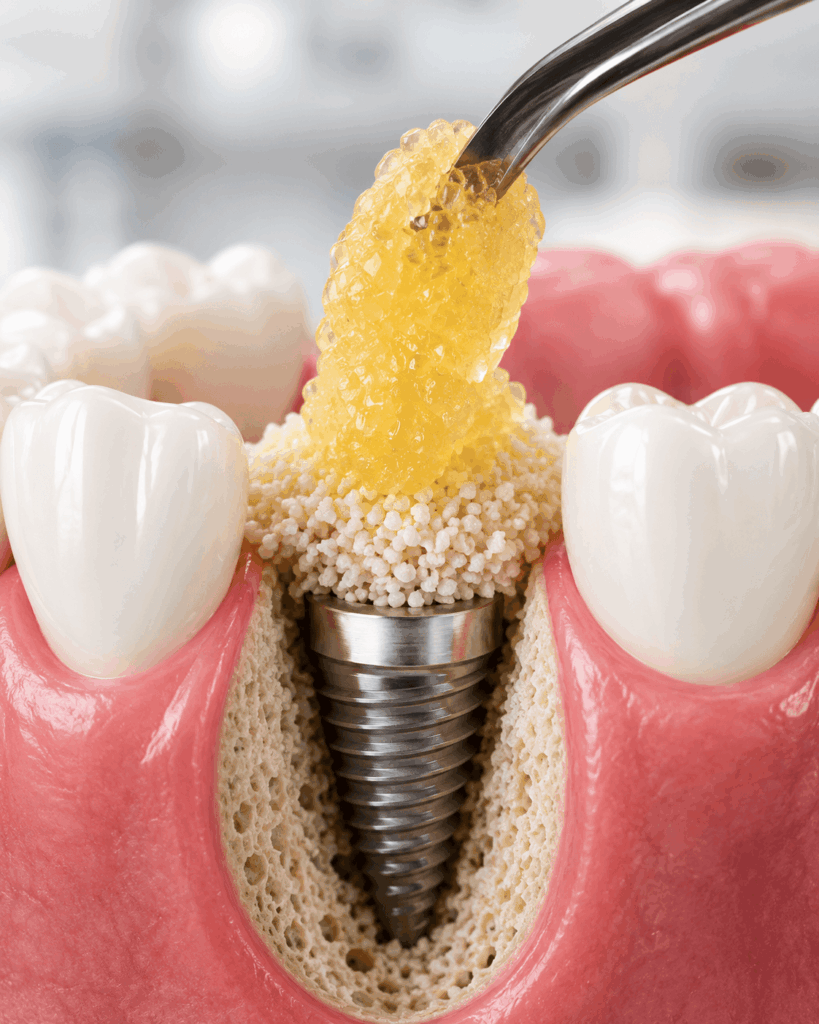
In these cases, PRF may be used alongside grafting materials to help stabilise the site and support early healing. The grafting material provides the scaffold or structure, while PRF may act as a biological support.
This distinction is important: PRF is not usually a direct substitute for bone grafting when significant bone volume is needed. Instead, it may be used as an adjunct to help support the healing environment.
At Ceramic Implant Clinic, grafting materials may include autogenous jaw bone, allograft, xenograft or synthetic graft materials, depending on the situation. PRF may be added where appropriate as part of the regenerative plan.
Learn more in Do You Need Bone Grafting Before Getting Ceramic Dental Implants?
When a tooth is removed, the body naturally begins to heal the socket.
In some cases, particularly where future implant placement is planned, your dentist may recommend socket preservation. This may involve grafting material, PRF, or a combination of both.
The aim is to help preserve the area as much as possible so that future implant treatment can be planned with better bone and soft tissue support.
This can be especially important in the front of the mouth, where gum shape, bone contour and aesthetics are critical to the final result.
After a ceramic dental implant is placed, the surrounding bone needs time to heal around the implant. This process is known as osseointegration.
PRF may be used in selected implant cases to support the soft tissue and healing environment around the surgical site. However, successful implant healing still depends on many factors, including:
This is why PRF should be seen as one part of a carefully planned treatment process, not a guarantee of success.
Because PRF is made from your own blood, it is considered an autologous material. This means it comes from you and is used for you.
The blood collection process is usually quick and similar to having a routine blood test. The blood is then processed chairside and used during your procedure.
As with any clinical procedure, your dentist will explain whether PRF is appropriate for you. Some medical conditions, medications or individual health factors may affect whether blood collection or PRF use is suitable.
Some patients ask whether PRF will make healing faster.
The answer is that PRF may support aspects of healing in selected cases, but it should not be viewed as a guarantee of faster healing or a replacement for good surgical planning.
Healing still depends on your overall health, oral hygiene, gum condition, bone quality, smoking status, medications, and how well the surgical site is protected after treatment.
At Ceramic Implant Clinic, we use PRF thoughtfully — not because every case needs it, but because in the right situation it may help support a more biologically favourable healing environment.
Research into PRF in oral surgery and implant dentistry continues to grow. Reviews describe its use in areas such as extraction socket healing, socket preservation, guided bone regeneration, sinus floor elevation and implant therapy.
A systematic review on PRF in implant therapy reported that PRF may have potential benefits in certain implant-related outcomes, although the evidence varies depending on the procedure, study design and clinical situation.
More recent research has also explored PRF around peri-implant soft tissues, suggesting possible benefits for soft tissue thickness and keratinised tissue width, while also noting that further high-quality studies are needed.
Overall, the research supports viewing PRF as a useful biological adjunct in selected cases, rather than as a standalone solution or guaranteed outcome.
At Ceramic Implant Clinic, we take a personalised and biologically guided approach to implant dentistry.
Our treatment planning considers your:
Where appropriate, PRF may be used alongside ceramic dental implants, bone grafting or extraction treatment to support the surgical site and healing process.
Our philosophy is simple: use the right material, in the right way, for the right patient.
If you are considering ceramic dental implants, tooth extraction or bone grafting, PRF may form part of your personalised treatment plan.
The best way to know whether it is appropriate is through a comprehensive consultation. At Ceramic Implant Clinic, we assess your oral health, bone support, gum health, medical history and treatment goals before recommending any surgical or regenerative procedure.
Book a consultation with Ceramic Implant Clinic to learn whether PRF may be suitable as part of your implant or bone grafting treatment.

Discover metal-free ceramic implant solutions designed with biocompatible materials, precision planning, natural aesthetics, and care that considers the whole person.