
If you’re considering ceramic dental implants, you may have been told that you need bone grafting before treatment can begin.
For many patients, this can raise understandable questions:
The good news is that needing a bone graft does not automatically mean you are unsuitable for ceramic dental implants. In many cases, bone grafting is used to help create a healthier and more stable foundation for the implant, particularly where bone has been lost after infection, gum disease, trauma, or long-term tooth loss.
At Ceramic Implant Clinic, our approach is careful, personalised and biologically guided. We do not recommend grafting automatically. We assess your bone, gums, bite, medical history, healing capacity and treatment goals before deciding whether bone grafting is genuinely needed.
For an overview of the complete treatment journey, read The Ceramic Dental Implant Process: What to Expect From Consultation to Final Restoration.
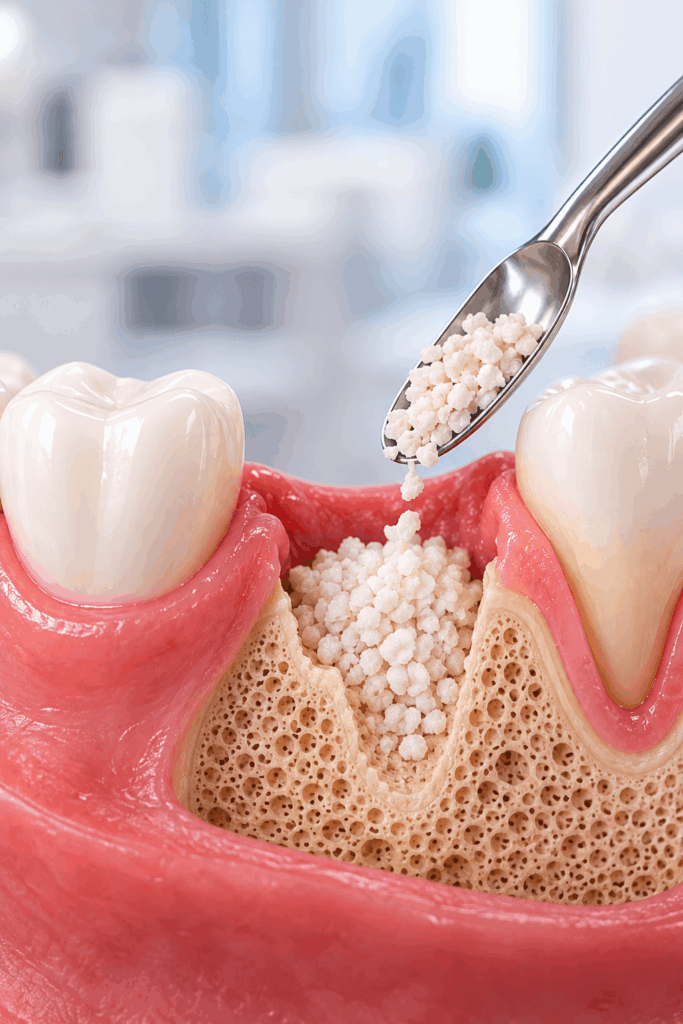
Bone grafting is a procedure used to preserve, rebuild, or increase bone in an area where there may not be enough support for a dental implant.
When a tooth is removed or has been missing for some time, the surrounding jawbone can gradually shrink because it is no longer being stimulated by the tooth root. This natural process is known as bone resorption.
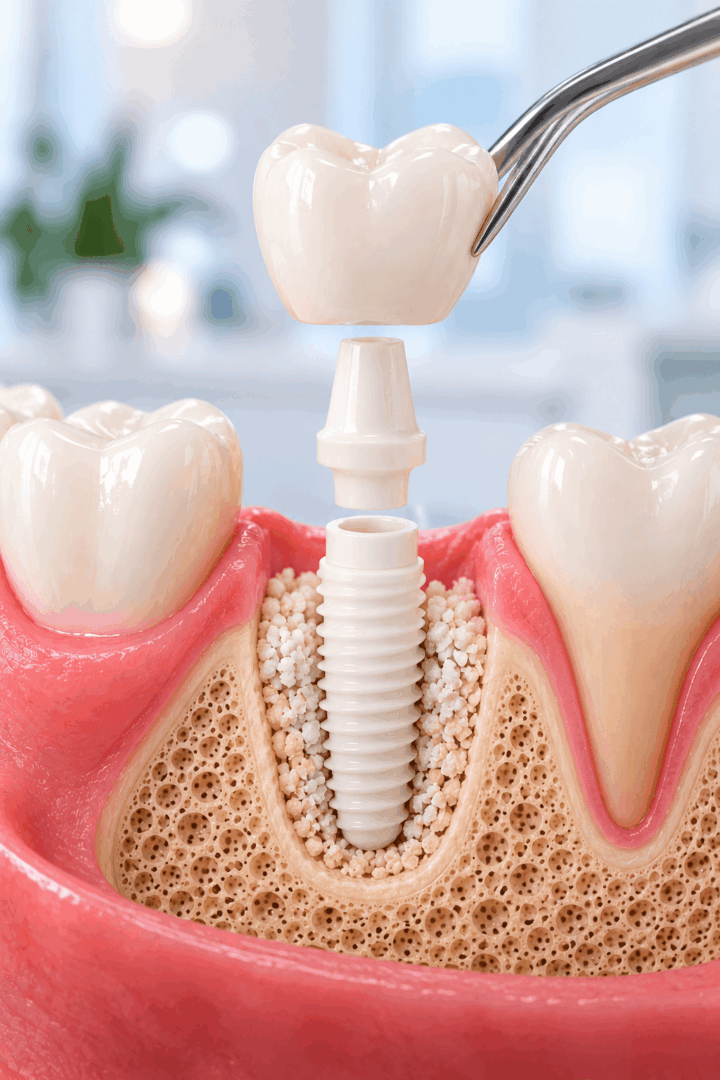
If there is not enough healthy bone to place an implant in the ideal position, your dentist may recommend bone grafting either before implant placement or at the same time as implant surgery.
The aim is not simply to “add bone.” The goal is to create the right foundation for the implant, gum tissue and final ceramic restoration.
Not every patient requires bone grafting before receiving ceramic dental implants.
However, it may be recommended if your 3D imaging or clinical assessment shows that additional bone support would improve the stability, positioning, function, or aesthetics of the implant.
Common reasons include:
Ceramic implants require precise three-dimensional positioning. This is especially important in aesthetic areas, where bone support, gum thickness and implant position all influence the final appearance.
During your consultation, we assess the amount and quality of jawbone using a combination of clinical examination and digital imaging.
This may include:
These findings help determine whether there is enough bone to support a ceramic dental implant, or whether additional preparation is recommended.
If you’re unsure whether ceramic implants are suitable for you, read Who Is a Good Candidate for Ceramic Dental Implants? A Complete Guide.
No.
Many patients who need bone grafting are still suitable candidates for ceramic dental implants.
In fact, grafting may be recommended because we are trying to improve the foundation for the implant rather than compromise on positioning or long-term stability.
Whether grafting is appropriate depends on:
At Ceramic Implant Clinic, we explain the advantages, limitations and alternatives clearly before treatment begins, so you can make an informed decision.
Different grafting materials may be used depending on the clinical situation.
At Ceramic Implant Clinic, grafting is selected carefully and may include:
We do not take grafts from distant body sites such as the hip. If autogenous bone is used, it is taken from the jaw region only.
The choice of grafting material depends on the size of the defect, the implant site, the healing requirements, and the overall treatment plan.
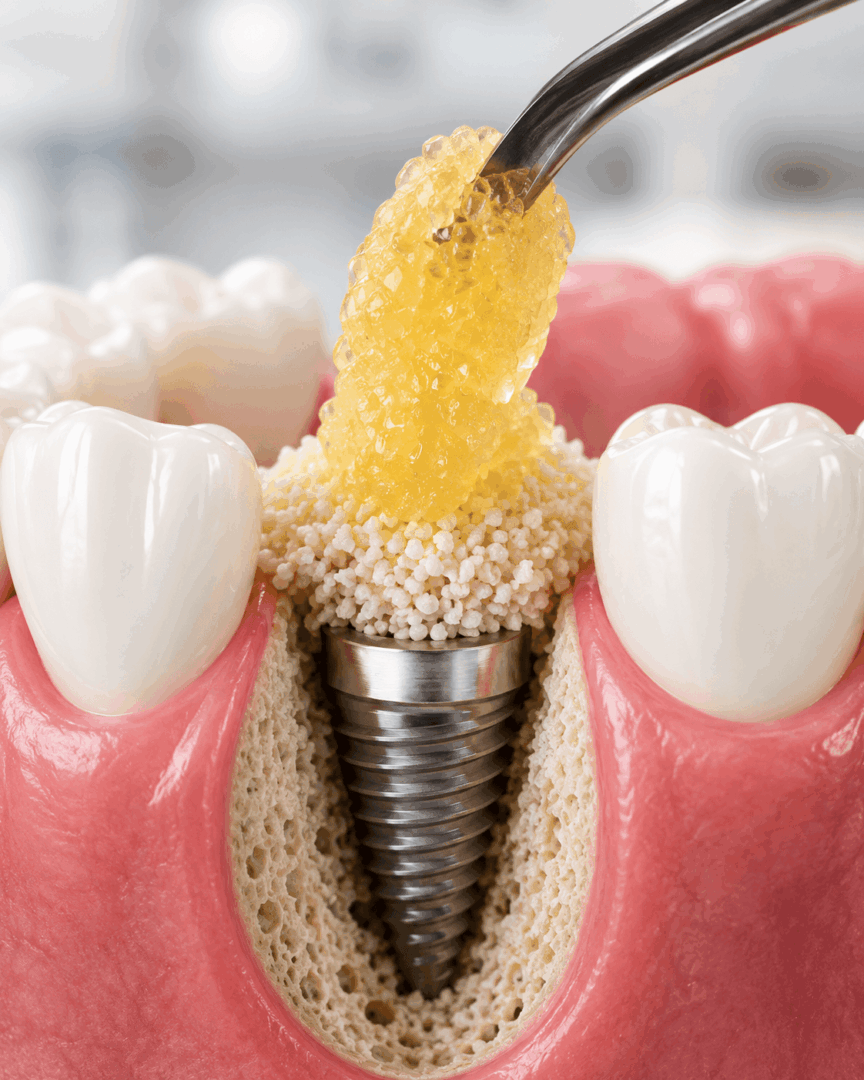
At Ceramic Implant Clinic, we may use PRF, or platelet-rich fibrin, as part of our surgical and regenerative protocols.
PRF is made from a small sample of your own blood, which is processed to concentrate platelets, fibrin and healing-related cells into a natural membrane or clot. Because it comes from your own blood, it is considered an autologous material.
In implant and oral surgery, PRF may be used to support soft tissue healing, socket preservation, bone grafting, sinus grafting and guided bone regeneration. It is not a replacement for sound surgical planning or adequate bone volume, but it can be a useful biological adjunct in selected cases. Reviews have described the use of PRF across oral surgery and implantology, including alveolar ridge preservation, sinus floor elevation and guided bone regeneration.
For patients who value a more biologically aligned approach, PRF fits well with our philosophy: using the body’s own healing potential where appropriate, while still applying evidence-based surgical principles.
Sometimes, yes.
Bone grafting may increase the treatment timeline because the grafted area often needs time to heal before the implant can be placed or restored.
Healing time depends on:
In some cases, grafting and implant placement can be performed together. In other cases, a staged approach is safer and more predictable.
Learn more in How Long Does Ceramic Dental Implant Treatment Take? A Step-by-Step Timeline.
In selected cases, yes.
Bone grafting and ceramic implant placement may sometimes be completed during the same appointment. This is often considered when there is enough existing bone to achieve implant stability, with grafting used to support the surrounding contour.
In other situations, we may recommend grafting first and allowing the area to heal before placing the implant.
The decision depends on:
The aim is always to choose the approach that best supports healing, function and long-term implant health.
Bone grafting is a well-established procedure used in implant dentistry and oral surgery.
As with any surgical procedure, there are possible risks, including swelling, bruising, discomfort, infection, delayed healing, graft exposure, or the need for additional treatment. These risks vary depending on the procedure, your health and the complexity of the graft.
Before treatment, your dentist will explain:
Following your post-operative instructions and attending review appointments helps support healing.
Recovery varies from person to person.
It is common to experience some swelling, tenderness or bruising after bone grafting. Your dentist will provide personalised instructions based on the procedure performed.
Aftercare may include:
For more information about healing after implant surgery, read Ceramic Dental Implant Recovery: Healing Stages and Aftercare Tips.
Bone regeneration in implant dentistry depends on careful diagnosis, appropriate biomaterial selection and the type of bone defect being treated. A 2019 European Workshop on Periodontology consensus report discussed regenerative technologies and biomaterials used in craniomaxillofacial bone regeneration, emphasising that outcomes depend on appropriate assessment of the defect site and material selection.
Research into PRF continues to grow. Systematic and narrative reviews have reported potential benefits of PRF in areas such as extraction socket healing, alveolar ridge preservation, guided bone regeneration and sinus floor elevation, although protocols and outcomes can vary between studies.
This is why we view PRF as a supportive adjunct rather than a guarantee. It may be useful in selected cases, but successful treatment still depends on diagnosis, surgical technique, stable gums, adequate bone support, healthy healing and long-term maintenance.
Bone grafting is only one part of comprehensive implant planning.
At Ceramic Implant Clinic, we assess your bone structure, gum health, medical history, bite, smile line, material preferences and treatment goals before recommending treatment.
This personalised approach helps ensure that grafting is only recommended when it supports the overall outcome. For some patients, grafting may be important. For others, it may not be necessary.
Our philosophy is to plan treatment around biology, not shortcuts.
If you’ve been told you may need bone grafting before receiving ceramic dental implants, the best place to start is with a comprehensive consultation.
At Ceramic Implant Clinic, we use detailed clinical assessment and advanced imaging to determine whether grafting is needed as part of your personalised treatment plan. We also consider whether PRF may be appropriate to support healing as part of your procedure.
Whether you require additional preparation or are ready to proceed with implant placement, our team will guide you through each stage and explain your options clearly so you can make an informed decision about your oral health.

Discover metal-free ceramic implant solutions designed with biocompatible materials, precision planning, natural aesthetics, and care that considers the whole person.