

If you’re considering ceramic dental implants, it is natural to wonder how long the treatment process will take.
The timeline for ceramic dental implant treatment varies from person to person. Some patients may be suitable for implant placement relatively soon after their consultation, while others may need additional preparation such as gum treatment, tooth extraction, infection management, or bone grafting before the implant can be placed.
At Ceramic Implant Clinic, we do not believe implant treatment should be rushed. Our approach is careful, personalised and biologically guided. We assess your oral health, bone structure, gum condition, medical history, bite, healing capacity and treatment goals before recommending the most appropriate timeline.
For many patients, ceramic implant treatment takes several months from consultation to final restoration. More complex cases may take longer, especially where bone grafting, gum stabilisation or staged healing is required.
For a complete overview of each stage of treatment, read The Ceramic Dental Implant Process: What to Expect From Consultation to Final Restoration.
Ceramic dental implants or Zirconia dental implants are made from zirconia, a strong, tooth-coloured ceramic material used to replace the root of a missing tooth. Once the implant has integrated with the jawbone, it can support a custom-made ceramic crown, bridge, or implant-supported restoration.
Unlike titanium implants, zirconia implants are metal-free and naturally white. This may be appealing for patients who value biocompatible materials, have aesthetic concerns around thin gums, or prefer a metal-free approach to dental care.
Ceramic implants are not necessarily the right option for every patient. Suitability depends on your oral health, bone structure, bite, medical history, gum condition, and treatment goals.
During your consultation, your dentist will explain the expected stages and timing based on your individual clinical situation.
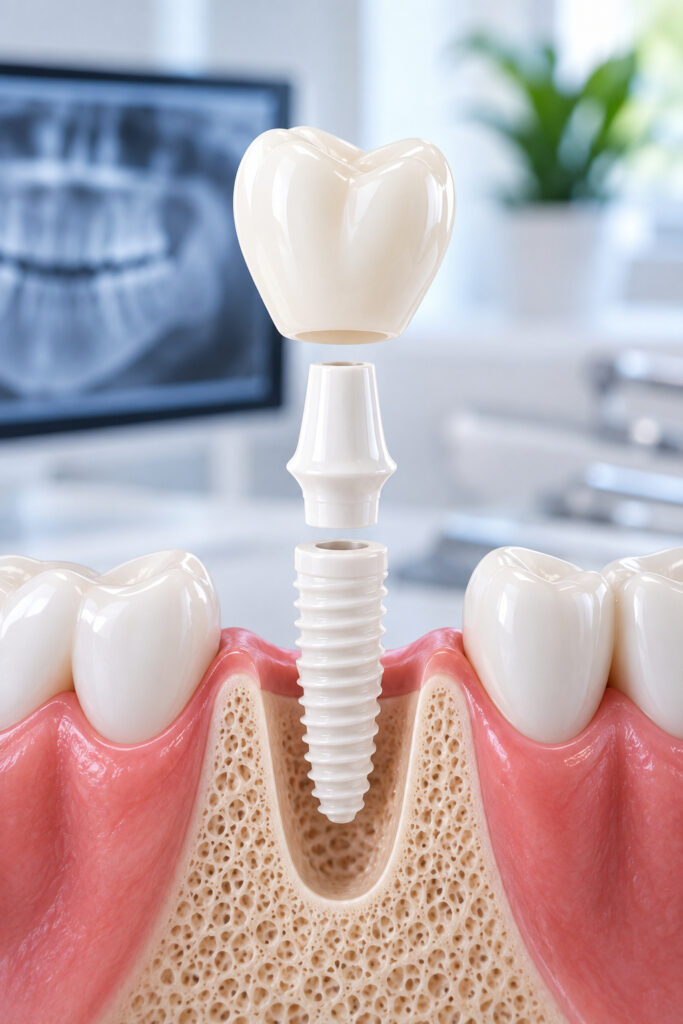
Although every case is different, ceramic dental implant treatment usually follows a carefully planned sequence.
| Treatment Stage | Typical Timing | What to Expect |
|---|---|---|
| Initial consultation | First appointment | Clinical examination, discussion of your concerns, review of your health history and assessment of your suitability for ceramic dental implants. |
| Diagnostic imaging and treatment planning | 1–3 weeks, depending on complexity | Digital scans, photographs and 3D imaging may be used to assess the bone, gums, bite and implant position. |
| Preparatory treatment, if required | Varies | Gum treatment, infection management, tooth extraction, bone grafting or oral hygiene support may be recommended before implant placement. |
| Ceramic implant placement | Usually one surgical appointment | The zirconia implant is placed into the jawbone under local anaesthetic. Sedation may be available for suitable patients. |
| Healing and osseointegration | Often 3–6 months | The jawbone gradually heals around the implant, creating a stable foundation for the final restoration. |
| Final restoration | Usually 2–4 weeks after records are taken | A custom ceramic crown, bridge or implant-supported restoration is made and fitted. |
| Ongoing maintenance | Long term | Regular reviews, professional cleans and home care help support the health of the implant, gums and surrounding teeth. |
These timeframes are general only. Your actual treatment timeline may be shorter or longer depending on your health, anatomy and treatment needs.
Dental implants require adequate bone support to provide long-term stability.
When a tooth has been missing for some time, the jawbone may shrink or change shape. Bone loss can also occur because of infection, trauma, gum disease or long-term denture wear.
If there is not enough bone to place the implant in the ideal position, bone grafting may be recommended. This can extend the overall timeline, but it may be important for creating a more stable foundation and a better aesthetic outcome.
At Ceramic Implant Clinic, bone grafting is not recommended automatically. It is considered only when it supports the long-term health, function and appearance of the final result.
Learn more in Do You Need Bone Grafting Before Getting Ceramic Dental Implants?
One of the most important stages of treatment is healing.
After the ceramic implant is placed, the surrounding jawbone gradually integrates with the implant through a natural process known as osseointegration.
This healing stage cannot be rushed. The implant needs time to become stable before the final crown or bridge is fitted.
Healing may be influenced by:
Your dentist will monitor healing before moving to the final restoration stage.
For more information, read Ceramic Dental Implant Recovery: Healing Stages and Aftercare Tips.
If a damaged, infected or failing tooth needs to be removed, your dentist will assess the most appropriate timing for implant placement.
In selected cases, an implant may be placed at the same appointment as the extraction.
In other cases, it may be better to allow the area to heal before implant placement. This is particularly relevant if there is infection, bone loss, thin gum tissue, or a high aesthetic demand such as a front tooth.
The timing depends on the condition of the tooth, the surrounding bone, gum quality and your overall treatment plan.
Healthy gums are essential for long-term implant success.
If gum disease, bleeding, inflammation or active infection is present, treatment is usually recommended before implant placement. This helps create a healthier environment for healing and reduces the risk of future complications around the implant.
Patients with a history of gum disease may still be suitable for ceramic implants, but they often require more careful planning and long-term maintenance.
Your general health can influence your treatment timeline.
Certain medical conditions, medications, smoking, vaping, diabetes, immune factors, clenching or grinding may affect healing and long-term implant planning. These factors do not always prevent implant treatment, but they need to be understood before surgery.
At Ceramic Implant Clinic, we take these details seriously because implant dentistry is not just about replacing a tooth. It is about planning treatment around the whole person.
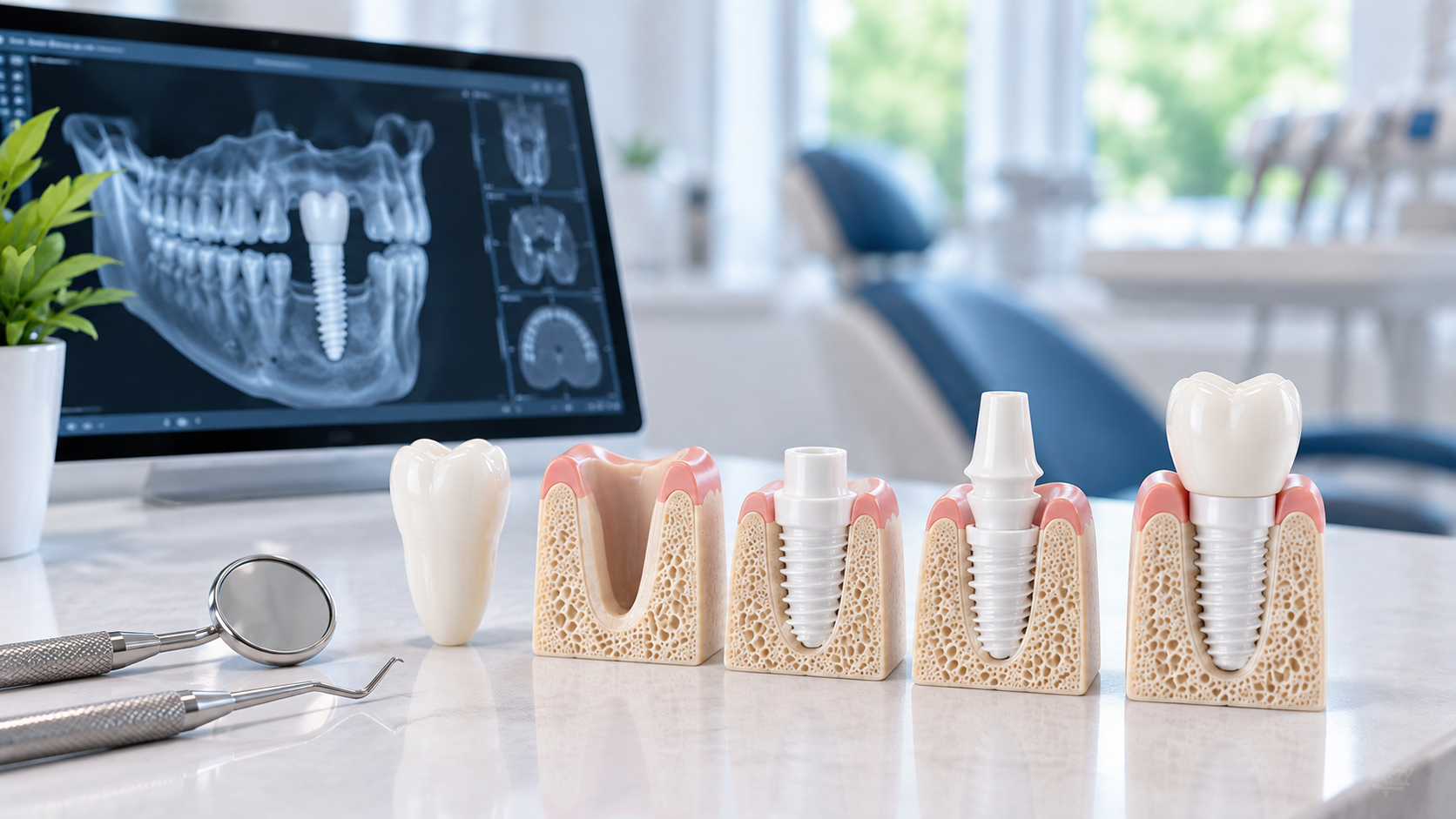
Some patients ask whether ceramic dental implants can be completed in a single day.
In selected cases, certain stages may be completed at the same appointment. For example, a tooth may be removed and an implant placed on the same day, or a temporary tooth may be provided during healing.
However, the final ceramic restoration is generally fitted only after the implant has healed and integrated with the surrounding bone.
Same-day treatment is not suitable for every patient. It depends on bone quality, gum condition, implant stability, bite forces, infection risk and the position of the tooth being replaced.
Our priority is not the fastest possible result. It is the most appropriate result for your health, function and long-term outcome.
No. A longer treatment timeline does not mean something is wrong.
In many cases, taking more time can support a better result. If bone grafting, gum treatment or staged healing is required, these steps may help create a healthier and more stable foundation for the implant.
This is especially important for patients with:
The aim is not to complete treatment as quickly as possible. The aim is to complete each stage at the right time.
Understanding the expected treatment timeline can help you prepare practically and emotionally.
Depending on your personalised plan, you may wish to consider:
Your dentist will guide you through each stage so you know what to expect before, during and after treatment.
No two ceramic dental implant cases are exactly the same.
At Ceramic Implant Clinic, we assess your oral health, bone structure, gum condition, medical history, bite, smile line, material preferences and treatment goals before recommending a treatment pathway.
Ceramic implants require precise planning. The implant position, surrounding gum tissue, bone support and final crown design all influence the long-term result.
This personalised approach helps ensure that treatment is not only functional, but also aligned with your health values, aesthetic goals and long-term oral wellbeing.
Clinical research continues to support dental implants as a long-term tooth replacement option when patients are appropriately selected, treatment is carefully planned and maintenance is ongoing.
Research on zirconia implants has shown promising outcomes, although titanium implants still have the longest and broadest evidence base. This is why ceramic implants should be recommended based on individual suitability rather than material preference alone.
Studies also show that gum health is an important factor in implant success. Patients with active or previous periodontal disease may have a higher risk of peri-implant complications, which supports the importance of treating and stabilising gum health before implant placement.
For ceramic implants, careful case selection, adequate bone support, healthy gums, precise positioning and long-term maintenance are all important parts of achieving a stable resul
Understanding the ceramic dental implant timeline can help you feel more confident as you plan your treatment.
Whether you require a single implant or a more comprehensive restoration, your treatment plan will be tailored to your individual needs. The right timeline depends on your oral health, gum health, bone support, medical history, healing response and final restoration goals.
If you’re considering ceramic dental implants, book a consultation with Ceramic Implant Clinic to receive a personalised assessment and learn what your treatment journey may involve.

Discover metal-free ceramic implant solutions designed with biocompatible materials, precision planning, natural aesthetics, and care that considers the whole person.