
If you are a smoker considering dental implants, you may be wondering whether ceramic dental implants are still an option.
Smoking can affect oral health, gum health, blood flow, and healing after surgery. However, being a smoker does not automatically prevent you from receiving implant treatment.
At Ceramic Implant Clinic, we assess each patient individually to determine whether ceramic dental implants may be suitable based on their oral health, bone structure, lifestyle factors, medical history, and treatment goals.
Smoking can interfere with the body’s natural healing process and may increase the risk of complications after dental implant surgery.
Tobacco use can affect blood flow to the gums, reduce oxygen delivery to healing tissues, and increase inflammation in the mouth. This can make it more difficult for the implant site to heal and may increase the risk of gum problems, bone loss, infection, or implant failure.
Because dental implants rely on healthy bone and gum tissue for long-term support, smoking is an important factor we consider during the assessment and planning process.

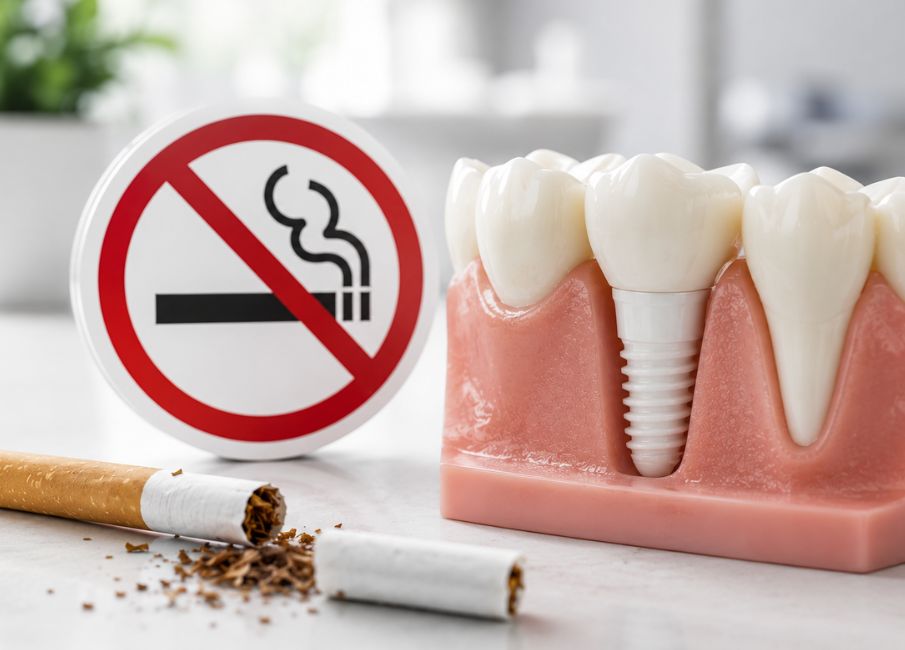
Research shows that smoking is associated with a higher risk of dental implant complications compared with non-smoking.
A systematic review and meta-analysis found that dental implants placed in smokers had a higher failure risk compared with non-smokers, with smokers showing more than double the risk of implant failure. The same review reported that implants in smokers had a 140.2% higher risk of failure than implants in non-smokers.
Long-term research has also found that smokers may be more prone to peri-implant bone loss and higher implant failure rates, particularly in the upper jaw.
This does not mean smokers cannot have dental implants. It means smoking needs to be considered carefully, and patients should be supported to reduce risk wherever possible.
In many cases, yes. Being a smoker does not automatically exclude you from receiving ceramic dental implants.
Your dentist will evaluate factors such as:
The goal is to determine whether the implant site provides a healthy and stable environment for successful treatment and healing.
For a broader overview of implant suitability, read Who Is a Good Candidate for Ceramic Dental Implants? A Complete Guide.

Ceramic dental implants are made from zirconia, a durable, metal-free material valued for its biocompatibility, strength, and natural tooth-coloured appearance.
Patients seeking ceramic dental implants in Melbourne often choose zirconia implants because they:
To learn more, visit our Comprehensive Guide to Ceramic Zirconia Dental Implants.
Most long-term smoking research in implant dentistry is based on titanium implants, because titanium implants have been used for longer and have a larger body of published evidence.
There is less long-term research specifically comparing smoking outcomes in ceramic implants versus titanium implants. For this reason, we take a cautious and personalised approach when planning ceramic implant treatment for smokers.
The key factors remain the same: gum health, bone support, healing capacity, oral hygiene, bite forces, and regular maintenance.
Whether you smoke or not, maintaining good oral health is important before and after implant treatment.
Your dentist may recommend:
Patients with existing gum concerns may find our article on Can Patients with Gum Disease Get Ceramic Dental Implants? helpful.
Successful implant treatment requires adequate bone support.
If bone loss has occurred, additional procedures such as bone grafting may sometimes be required before or during implant placement. Smoking may also affect healing after grafting procedures, so this needs to be considered carefully during treatment planning.
Learn more in Do You Need Bone Grafting Before Getting Ceramic Dental Implants?
Many smokers are surprised to learn they may still be candidates for ceramic implants in Melbourne.
The key is undergoing a comprehensive assessment that considers your individual circumstances rather than focusing on smoking status alone.
At Ceramic Implant Clinic, we evaluate your oral health, bone structure, gum health, medical history, lifestyle, and treatment goals to determine the most appropriate solution for replacing missing teeth.
If you are considering ceramic dental implants and want to understand your options, a personalised consultation is the best place to start.
Mustapha AD, Salame Z, Chrcanovic BR. Smoking and Dental Implants: A Systematic Review and Meta-Analysis. Medicina. 2021;58(1):39.
Windael S, Collaert B, De Buyser S, De Bruyn H. The Long-Term Effect of Smoking on 10 Years’ Survival and Success of Dental Implants: A Prospective Analysis of 453 Implants. Journal of Clinical Medicine. 2020;9(4):1056.

Discover metal-free ceramic implant solutions designed with biocompatible materials, precision planning, natural aesthetics, and care that considers the whole person.