

If you’re considering ceramic dental implants, it is completely normal to have questions about the surgical procedure.
Many patients feel confident about wanting to replace a missing or failing tooth, but still want to understand what implant surgery involves, whether it is painful, how long it takes, what recovery feels like, and how healing is supported.
At Ceramic Implant Clinic, we believe informed patients make better decisions. Our approach is calm, personalised and biologically guided. Before recommending treatment, we assess your oral health, gum condition, bone support, bite, medical history, aesthetic goals and material preferences.
This guide answers some of the most common questions about ceramic dental implant surgery so you can feel more prepared before treatment begins.
For a complete overview of the entire process, read The Ceramic Dental Implant Process: What to Expect From Consultation to Final Restoration.
The length of surgery depends on your individual treatment plan.
A straightforward single implant appointment may be relatively short, while more complex treatment can take longer. The procedure time may be influenced by:
Before your procedure, your dentist will explain what is involved and give you an estimate based on your personalised treatment plan.
For more information about treatment duration, read How Long Does Ceramic Dental Implant Treatment Take? A Step-by-Step Timeline.
Most ceramic dental implant surgery is completed while the patient is awake under local anaesthetic.
This is similar to many other dental procedures, where the area is completely numbed before treatment begins.
For patients who feel nervous, have a strong gag reflex, or are undergoing more involved treatment, sedation may be available depending on your medical history and suitability.
At Ceramic Implant Clinic, we take time to discuss your comfort before treatment. The aim is for you to understand what will happen, feel prepared, and know what options are available to support you during the procedure.

Not every patient needs bone grafting before receiving a ceramic dental implant.
Bone grafting may be recommended if there is not enough bone to support the implant in the ideal position. This can happen after tooth loss, infection, gum disease, trauma, or long-term denture use.
Your dentist will assess your bone using clinical examination and 3D imaging. This helps determine whether the implant can be placed predictably, or whether additional support is needed first.
Bone grafting does not mean you are unsuitable for ceramic dental implants. In many cases, it is recommended to create a healthier and more stable foundation for treatment.
Learn more in Do You Need Bone Grafting Before Getting Ceramic Dental Implants?
At Ceramic Implant Clinic, we may use PRF, or platelet-rich fibrin, in selected surgical cases.
PRF is made from a small sample of your own blood. It is processed to create a natural fibrin clot or membrane containing platelets and healing-related cells.
PRF may be used to support soft tissue healing, extraction sites, bone grafting, socket preservation, sinus grafting or guided bone regeneration.
Because PRF comes from your own blood, it aligns well with our biologically guided approach to implant dentistry. It is not a substitute for careful planning, adequate bone support or good surgical technique, but it may be a useful adjunct in suitable cases.
Your dentist will explain whether PRF is recommended as part of your individual treatment.
Sometimes, yes — but not always.
In selected cases, a failing tooth may be removed and a ceramic implant placed during the same appointment. This is known as immediate implant placement.
However, same-day placement is not suitable for every patient. The decision depends on factors such as:
For front teeth, careful planning is especially important because gum shape, bone support and implant position all influence the final appearance.
At Ceramic Implant Clinic, we do not choose speed over biology. If a staged approach is likely to provide a better foundation, we will explain why.
In many cases, temporary tooth replacement options can be discussed while the implant heals.
The best option depends on the location of the missing tooth, the stability of the implant, your bite, aesthetic needs and the type of final restoration being planned.
Temporary options may include:
Not every temporary option is suitable for every patient. In some cases, a temporary tooth may be designed for appearance only and not for heavy chewing.
Your dentist will explain what is safest and most appropriate for your situation before treatment begins.
Recovery varies between patients and depends on the type of procedure performed.
Some patients return to normal daily activities relatively quickly after a straightforward single implant procedure. More complex treatment, especially where extractions, grafting or multiple implants are involved, may require more recovery time.
Your dentist will provide personalised advice about:
It is generally best to avoid strenuous activity immediately after surgery, especially during the early healing period.
Ceramic dental implants are made from zirconia, a biocompatible ceramic material used in dentistry for many years.
For suitable patients, zirconia implants can provide a metal-free option for replacing missing teeth. However, like all implant treatment, they require careful assessment, precise planning and ongoing maintenance.
No surgical procedure is risk-free. Possible risks may include discomfort, swelling, infection, delayed healing, lack of integration, gum recession, bone loss, implant failure, or complications with the final restoration.
At Ceramic Implant Clinic, we discuss the expected benefits, risks, limitations and alternatives before treatment begins. This includes explaining when ceramic implants are suitable and when another treatment option may be more appropriate.
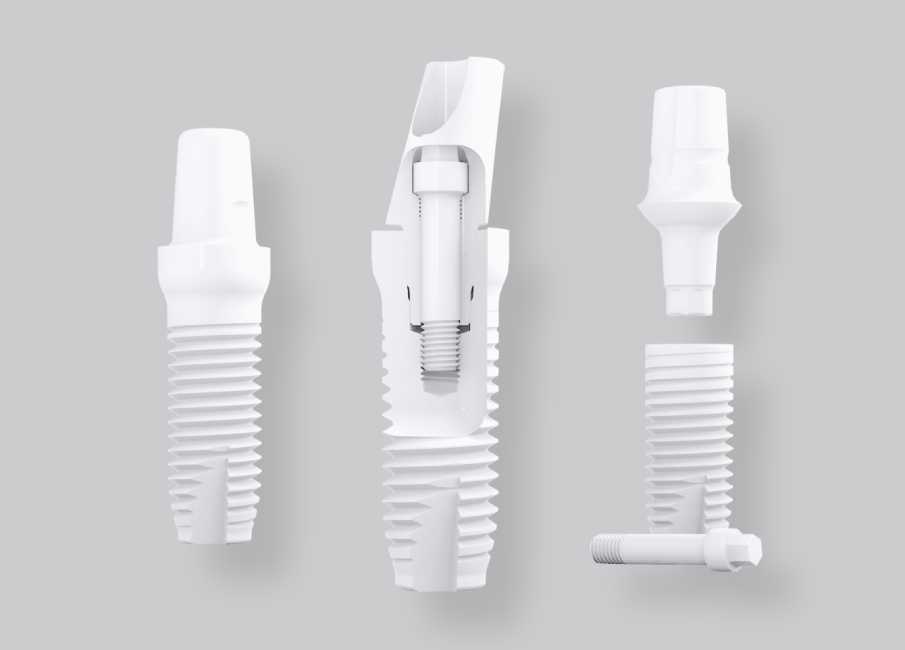
Ceramic and titanium implants can both be successful when used in the right situation.
Titanium implants have the longest and broadest history of clinical use. Ceramic implants may be preferred by patients who value a metal-free material, have aesthetic concerns around thin gum tissue, or want a zirconia implant option.
The best choice depends on your individual case.
At Ceramic Implant Clinic, our focus is ceramic implant dentistry, but our recommendations are still guided by clinical suitability. We consider your bone, gums, bite, smile line, medical history and restorative needs before advising which option is most appropriate.
Teeth grinding or clenching can place extra pressure on both natural teeth and implant restorations.
If you grind or clench, it does not automatically mean you cannot have ceramic dental implants, but it does need to be considered carefully.
Your treatment plan may include:
Protecting the implant from overload is an important part of long-term success.
Feeling nervous before implant surgery is very common.
At Ceramic Implant Clinic, we take time to explain each stage of treatment before anything begins. Many patients feel more comfortable once they understand what to expect, how the area will be numbed, what recovery is likely to feel like, and what support is available.
If you feel anxious, please let your dentist know. Depending on your treatment and medical history, options such as sedation, additional appointment time, clear step-by-step explanations and supportive aftercare planning may be discussed.
Our goal is to make the process feel calm, considered and well supported.
Healing is influenced by your oral health, general health and the way the surgical site is cared for after treatment.
You can help support healing by:
If bone grafting or PRF has been used, your dentist may provide additional instructions to help protect the site during early healing.
After healing is complete, ongoing hygiene and professional maintenance remain essential.
For ongoing maintenance advice, read How to Care for Ceramic Dental Implants for Long-Term Success.
Some swelling, tenderness and mild discomfort can be normal after implant surgery.
However, you should contact your dentist if you notice symptoms that are worsening rather than improving, such as:
Early advice can help identify whether additional care is needed.
Research on zirconia implants continues to grow, with systematic reviews reporting promising clinical outcomes in appropriately selected cases.
However, successful implant surgery depends on much more than the implant material alone. Long-term outcomes are influenced by bone support, gum health, surgical technique, implant positioning, bite forces, smoking status, medical history and maintenance.
Research also highlights the importance of managing gum health. Active gum disease or a history of periodontitis may increase the risk of inflammation and complications around implants, which is why periodontal health should be assessed before treatment.
PRF has also been studied as a biological adjunct in oral surgery and implant dentistry. It may support healing in selected procedures, but it should be viewed as an adjunct rather than a guarantee.
Every ceramic dental implant case is different, and it is normal to have questions before making a decision.
At Ceramic Implant Clinic, we take the time to understand your oral health, medical history, gum condition, bone support, treatment goals and concerns before recommending a personalised treatment plan.
If you’re considering ceramic dental implants, book a consultation with Ceramic Implant Clinic to discuss your options and receive advice tailored to your individual needs.

Discover metal-free ceramic implant solutions designed with biocompatible materials, precision planning, natural aesthetics, and care that considers the whole person.